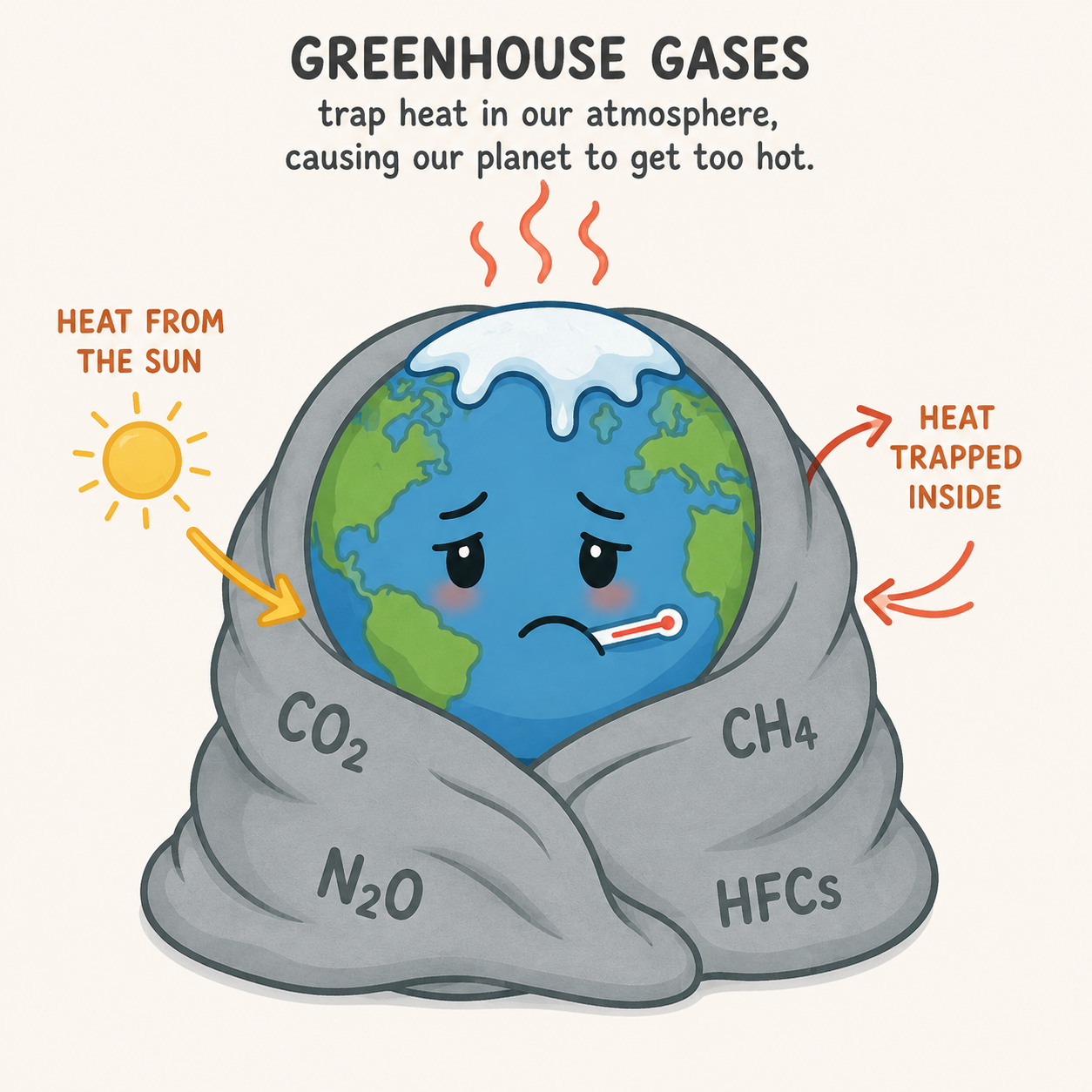
Why Do Scientists Use AI?
From Computational Efficiency to Climate Innovation
The most likely way of reversing the trajectory of climate change is through people using AI to develop previously unthought-of methods and technologies.
1Climatologist, Economist
2Physicist
September 2026
Why Do Scientists Use AI?
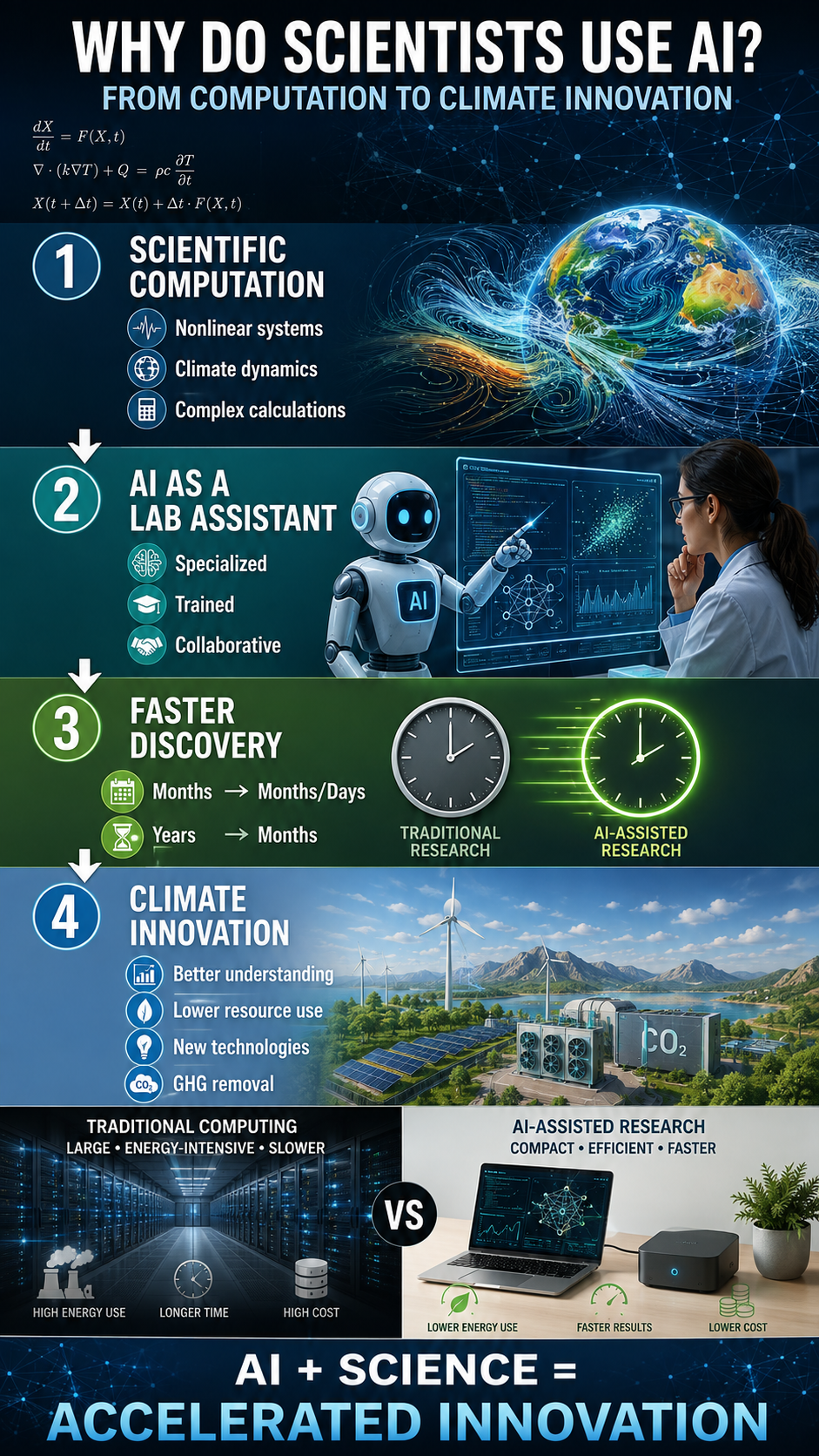
The short answer is:
We’ve conducted case studies on the use of AI in a wide variety of environments, including everything from the dynamics of nonlinear chaotic systems to songwriting and musical production.
All produced similar results—benefits to the environment, the economy, and society.
For instance, the climate education and graphics used for this post are based on this scientific paper as well as the publicly accessible version.
If I had created them manually, the costs in time, labor, energy, and resources would have been substantial. Using AI, the direct dollar cost to me was effectively zero, the graphics were generated in about a minute, and the estimated natural-resource cost was roughly $0.067 per image.
By comparison, producing similar graphics through traditional methods could easily have cost hundreds of dollars when accounting for labor, software, revisions, and associated natural-resource use. Mathematically, the AI-generated version required approximately 0.005% of those resources—just five thousandths of one percent of the traditional cost. These savings are equivalent to a reduction in environmental impact.
The benefits—in both environmental savings to the planet through reduced physical-resource use and in the ability to produce and distribute education—far outweigh the costs.
Most importantly:
The only effective way to stop the acceleration of climate change is through the reduction of fossil-fuel combustion.
However, the most likely way of reversing the trajectory of climate change is through people using AI to develop previously unthought-of methods and technologies that can fundamentally change how we produce, consume, and manage resources—and potentially remove greenhouse gases from the atmosphere.
Anti-Science and Technology Rhetoric
Unfortunately, the lack of science and technology literacy is at the root of many of society’s problems. Anti-AI opinions can sometimes resemble the anti-science rhetoric used by climate-change deniers, particularly when conclusions are formed before the underlying evidence or technology has been examined.
Research in cognitive and political psychology suggests that rejection of scientific evidence is more complicated than simply a lack of intelligence or education. People can engage in motivated reasoning—evaluating evidence in ways that protect existing political, ideological, or cultural identities. When scientific findings conflict with strongly held beliefs, individuals may scrutinize contradictory evidence more critically, accept supporting evidence with less scrutiny, or reinterpret information so that it remains compatible with their existing worldview. This phenomenon has been documented across a range of politically contested scientific issues, including climate change. (Kahan, 2017; Borghi et al., 2026.)
Importantly, this does not mean that people who reject scientific evidence necessarily lack intelligence or analytical ability. Some research has found that greater reasoning ability can actually strengthen politically motivated reasoning when individuals use that ability to construct arguments supporting conclusions they are already motivated to accept.
Conspiracy beliefs provide another example. A review of the literature found that conspiracy belief is generally associated with greater reliance on intuition and less reflective reasoning. Other preregistered research has found that endorsement of particularly implausible conspiracy theories can be associated with reduced information sampling and less reflective reasoning. (Binnendyk & Pennycook, 2022; Hattersley et al., 2022.)
The same general principles apply to public opinions about technology. Someone who has never used AI as a scientific research assistant is evaluating the technology from a fundamentally different position than a scientist who has spent years developing, testing, and refining specialized AI systems for research. An opinion formed without direct experience may therefore reflect assumptions about what AI is rather than knowledge of what AI can actually do.
Scientists increasingly use AI as a specialized research tool. AI is artificial SUPPLEMENTAL intelligence. It is not necessarily a replacement for the scientist. Instead, it can function as an extension of the researcher’s computational, analytical, and creative capabilities—particularly when the system has been deliberately trained or configured for a specific scientific task.
Science communication research also suggests that curiosity and willingness to engage with information can matter. Kahan found that science curiosity was associated with more open-minded engagement with information that conflicted with a person’s political predispositions. In other words, the ability to consider information that challenges one’s existing beliefs may be at least as important as simply possessing scientific knowledge. (Kahan, 2017.)
In my case, I have spent years developing multiple specially trained “lab assistants” that have learned from scores of our own work. When Sidd and I started, our work had to be done on Ohio State computers and supercomputers that Sidd helped create. Things like “a floating decimal” were, and still are, a significant problem. Problems that needed solving would take months or years to process. The amount of energy spent on computation was enormous compared with today.
Things have changed for the better.
This year, we were able to establish third-derivative behavior across multiple climate indicators—extremely important developments in climate science that confirm that the acceleration rate of climate change is itself accelerating. This work was completed within four months. Historically, I would have been unlikely to complete this work in my lifetime if it were not for AI.
The broader lesson is that scientific progress depends not only on the ability to acquire information but also on the willingness to investigate unfamiliar methods and revise established assumptions. Research on science denial emphasizes that rejection of expert conclusions cannot be explained simply by ignorance or irrationality. Trust, identity, perceived competence, political conflict, and the social cues people use to determine whom to believe can all influence whether scientific evidence is accepted. (Lewandowsky et al., 2022; Sinatra et al., 2019.)
In the meantime, the United States has gone extremist in anti-science and anti-technology ideology, much to the detriment of science and scientists in the U.S. In fact, we are now working on bringing up our own AI computer using Chinese technology. It will be running on DeepSeek. The single computer will do the work of what used to take at least a dozen servers to accomplish, at a fraction of the price. It will not be run in a data center. It will not be costing society anything. In fact, it will be greatly benefiting society and helping to solve the climate crisis.
The distinction is therefore important: criticizing a technology based on evidence, testing, or demonstrated limitations is part of science. Rejecting a technology without understanding how it works or without examining its actual applications is something very different.
So, the next time you want to voice your opinion about AI, do your homework first. Start by getting at least a master’s-level education in climate science. Then spend years training your AI assistants. After completion, I would be happy to discuss AI with you.
References
Binnendyk, J., & Pennycook, G. (2022). Intuition, reason, and conspiracy beliefs. Current Opinion in Psychology, 47, 101387.
Borghi, O., Tappin, B. M., Smets, K., & Tsakiris, M. (2026). Mind over bias: How is cognitive control related to politically motivated reasoning? Cognition, 268, 106373.
Hattersley, M., Pummerer, L., & Van Prooijen, J.-W. (2022). Of tinfoil hats and thinking caps: Reasoning is more strongly related to implausible than plausible conspiracy beliefs. Cognition, 226, 104956.
Kahan, D. M. (2017). Science curiosity and political information processing. Political Psychology, 38(S1), 179–199.
Lewandowsky, S., Smillie, L., Garcia, D., Hertwig, R., Weatherall, J., Egidy, S., Robertson, R. E., O’Connor, C., Kozyreva, A., Lorenz-Spreen, P., Blaschke, Y., & Leiser, M. (2022). When science becomes embroiled in conflict: Recognizing the public’s need for debate while combating conspiracies and misinformation. Proceedings of the National Academy of Sciences, 119(34).
Sinatra, G. M., Kienhues, D., & Hofer, B. K. (2019). Addressing challenges to public understanding of science: Epistemic cognition, motivated reasoning, and conceptual change. Educational Psychologist, 54(1), 1–10.
1. Advanced Clinical Screening and Diagnostics
- Breast Cancer Screening: AI algorithms analyze complex medical imaging, including 2D and 3D mammograms and ultrasound, to identify subtle patterns and abnormalities that can be difficult to detect consistently. In a large prospective Swedish screening study involving more than 55,000 women, AI-supported mammography achieved a 4% higher cancer-detection rate than standard double reading while remaining within the study's predefined non-inferiority criteria.
Source: https://pubmed.ncbi.nlm.nih.gov/37690911/ - AI-Powered Breast Ultrasound: AI is also being applied to breast ultrasound to assist with lesion detection, characterization, and reporting, extending AI-supported screening beyond mammography.
Source: https://deephealth.com/press-releases/deephealth-receives-fda-clearance-for-ai-powered-breast-ultrasound/ - Predicting Breast Cancer Risk: AI is moving beyond detecting existing tumors toward predicting future disease. Researchers have developed systems that analyze mammographic tissue patterns to estimate an individual's personalized five-year risk of developing breast cancer.
Source: https://medicine.washu.edu/news/ai-based-breast-cancer-risk-technology-receives-fda-breakthrough-device-designation/ - Digital Pathology: Deep-learning systems can analyze digitized pathology slides at extremely high resolution, identifying tumor patterns, grading disease, quantifying biomarkers, and extracting morphological information that can assist pathologists with diagnosis and prognosis.
Source: https://pubmed.ncbi.nlm.nih.gov/33990804/ - Early Pancreatic Cancer Detection: Pancreatic cancer is notoriously difficult to identify early. Researchers are using AI to analyze electronic health records, medical images, and biomarkers to identify patients at elevated risk before conventional clinical diagnosis.
Source: https://pmc.ncbi.nlm.nih.gov/articles/PMC11296923/
2. Vaccine Development and Engineering
- Generative Antigen Design: AI and computational biology can search enormous numbers of possible protein sequences and structures to identify vaccine antigens with desirable properties. Instead of testing every possibility experimentally, researchers can use computation to narrow the field to promising candidates for laboratory testing.
Source: https://www.nature.com/articles/s41423-023-01116-8 - Pan-Coronavirus Vaccine Development: AI-assisted computational methods are being used to design vaccines that target conserved structural features shared among related viruses rather than focusing exclusively on a single strain or variant.
Source: https://www.nature.com/articles/s41423-023-01116-8 - AI-Designed Vaccines Enter Human Testing: Computationally designed vaccine candidates are beginning to move from laboratory research into human clinical trials, demonstrating how AI can become part of the vaccine-development pipeline rather than simply an analytical tool.
Source: https://clinicaltrials.gov/ - Personalized Cancer Vaccines: AI can help identify tumor-specific mutations, or neoantigens, that may be useful targets for personalized cancer vaccines. Computational systems can prioritize which mutations are most likely to generate an immune response, helping scientists design individualized vaccine candidates.
Source: https://pubmed.ncbi.nlm.nih.gov/39582860/ - Malaria Vaccine Research: Machine learning is being used to analyze parasite genetics and prioritize potential vaccine targets, helping researchers investigate proteins and antigens that might otherwise be difficult to identify from the enormous number of possible candidates.
Source: https://today.umd.edu/to-hunt-for-better-malaria-vaccines-researchers-turn-to-machine-learning
3. Oncology and Tailored Cancer Therapeutics
- Predicting Chemotherapy Response: Machine-learning models can combine clinical, pathological, imaging, and molecular information to estimate which treatments are more likely to benefit individual patients. Researchers are developing AI models capable of identifying patterns associated with treatment response and resistance.
Source: https://pubmed.ncbi.nlm.nih.gov/33439725/ - Genome-Informed Treatment Selection: Deep-learning systems can combine genomic information with biological models of cellular signaling to predict how tumors may respond to specific drugs. These approaches are expanding the possibilities of precision oncology.
Source: https://www.nature.com/articles/s42256-024-00866-y - Personalized Cancer Vaccines: Tumor sequencing can identify mutations unique to an individual's cancer. AI-assisted computational pipelines can then prioritize neoantigens and help determine which targets should be incorporated into an individualized vaccine designed to stimulate an immune response against tumor cells.
Source: https://pubmed.ncbi.nlm.nih.gov/39582860/ - Targeting Previously Difficult Mutations: Computational modeling is increasingly being combined with structure-guided drug discovery to attack cancer-driving proteins that were historically difficult to target. Daraxonrasib, for example, is an oral RAS inhibitor targeting active RAS proteins and represents a new approach to treating cancers driven by RAS signaling.
Source: https://pubs.acs.org/jmcmar/article/68/6/6064/3643788/Discovery-of-Daraxonrasib-RMC-6236-a-Potent-and - Pathology-to-Treatment Prediction: AI can analyze tumor histopathology images and infer molecular characteristics that may help predict treatment response. Deep-learning approaches are being investigated as a way to connect visual characteristics of tumors with underlying molecular biology.
Source: https://www.nature.com/articles/s43018-024-00793-2
4. Materials Science, Physics, and Energy
- Discovering New Materials: Machine learning can search enormous chemical and structural spaces for materials with useful properties. Google's GNoME system demonstrated the ability to identify millions of candidate crystal structures, substantially expanding the number of computationally identified stable materials available for further investigation.
Source: https://www.nature.com/articles/s41586-023-06735-9 - Battery Materials: AI and machine learning are being used to predict material properties, optimize battery designs, model degradation, and reduce the number of physical experiments required during materials research.
Source: https://www.nature.com/articles/s41586-025-09951-7 - Clean-Energy Materials: Machine learning is being applied to photovoltaics, batteries, electrocatalysts, energy conversion, and other technologies involved in the development of lower-carbon energy systems.
Source: https://www.nature.com/articles/s41578-022-00490-5 - Protein Structure and Drug Discovery: AI-based protein-structure prediction has transformed structural biology. AlphaFold-based approaches can provide structural hypotheses that would otherwise require expensive and time-consuming experimental work, although experimental validation remains essential.
Source: https://www.nature.com/articles/d41586-024-00130-8 - Advanced Materials for Clean Energy: Graph neural networks and related AI methods are being used to predict defects and other properties of materials relevant to high-temperature energy applications, helping scientists search material space more efficiently.
Source: https://www.nature.com/articles/s43588-023-00495-2
5. Climate Science and Earth-System Modeling
- Ultra-Fast Weather Forecasting: AI forecasting systems can produce global weather predictions dramatically faster than traditional numerical weather-prediction systems. GraphCast demonstrated that AI could generate 10-day global forecasts in under a minute while matching or exceeding traditional forecasting performance across many verification measures.
Source: https://www.science.org/doi/10.1126/science.adi2336 - Reducing Computational Energy: AI weather forecasting can also dramatically reduce the computational resources required for some forecasting tasks. The European Centre for Medium-Range Weather Forecasts has reported that its operational AI forecasting system can produce forecasts much faster and with substantially lower energy requirements than its traditional physics-based system.
Source: https://www.ecmwf.int/en/about/media-centre/news/2025/ecmwfs-ai-forecasts-become-operational - Extreme Weather Prediction: AI forecasting systems are being developed and tested for tropical cyclones, atmospheric rivers, extreme temperatures, precipitation, and other high-impact weather events. Faster forecasting can provide additional time for emergency preparation and response.
Source: https://deepmind.google/discover/blog/graphcast-ai-model-for-faster-and-more-accurate-global-weather-forecasting/ - Nonlinear Climate Dynamics: AI and machine learning provide new methods for analyzing complex, nonlinear climate systems. Researchers are using machine learning to identify patterns, reconstruct observations, improve prediction, study dynamical processes, and detect signals associated with nonlinear phenomena such as tipping behavior. Deep-learning approaches have also been demonstrated for providing early warnings of rate-induced tipping in nonlinear dynamical systems.
Sources:
https://www.nature.com/articles/s42254-024-00776-3
https://www.nature.com/articles/s42256-024-00937-0 - Climate-System Data Analysis: Modern climate research produces enormous datasets from satellites, ocean observations, atmospheric measurements, weather stations, and numerical models. Machine learning can help scientists analyze these high-dimensional datasets, reconstruct missing observations, identify patterns and anomalies, and extract relationships that are difficult to identify using conventional analytical approaches alone. A 2026 Nature Communications review describes AI as increasingly capable of learning directly from vast streams of Earth observations for weather and climate prediction.
Sources:
https://www.nature.com/articles/s42254-024-00776-3
https://www.nature.com/articles/s41467-026-75787-y - Climate Modeling: Machine learning is increasingly being used alongside conventional climate models to emulate computationally expensive processes, improve parameterizations, accelerate selected model components, and generate large ensembles of simulations. Climate-model emulators can reproduce selected outputs of complex Earth-system models at substantially lower computational cost, allowing scientists to explore more scenarios and parameter combinations than would otherwise be practical.
Sources:
https://www.nature.com/articles/s42254-024-00776-3
https://gmd.copernicus.org/articles/16/6433/2023/
https://www.annualreviews.org/content/journals/10.1146/annurev-environ-012125-085838
https://www.nature.com/articles/s43247-026-03238-z
6. Astronomy and Space Science
- Exoplanet Detection: Machine-learning systems can analyze enormous astronomical datasets and stellar light curves to identify transit signals associated with exoplanets. Researchers have demonstrated machine-learning approaches on Kepler, K2, TESS, and ground-based survey data, providing automated methods for identifying and ranking potential planetary signals.
Sources:
https://academic.oup.com/mnras/article/474/1/478/4564439
https://academic.oup.com/mnras/article/513/4/5505/6472249
https://academic.oup.com/mnras/article/483/4/5534/5199219 - Gravitational-Wave Detection: Machine learning is being used to analyze gravitational-wave detector data containing instrumental noise, transient disturbances, and extremely rare astrophysical signals. AI-based methods can assist in identifying candidate gravitational-wave events and distinguishing astrophysical signals from instrumental artifacts, providing another layer of analysis alongside conventional detection pipelines.
Sources:
https://doi.org/10.1103/yfb3-fgf2
https://www.annualreviews.org/content/journals/10.1146/annurev-statistics-042720-112045
https://wires.onlinelibrary.wiley.com/doi/10.1002/widm.1349 - Galaxy Classification: AI systems can automatically classify galaxies according to morphology, allowing astronomers to analyze enormous survey datasets and study galaxy formation and evolution. Deep-learning systems have been demonstrated on hundreds of thousands to more than 20 million galaxies, achieving high agreement with human classifications for several morphological categories.
Sources:
https://academic.oup.com/mnras/article/476/3/3661/4848300
https://academic.oup.com/mnras/article/507/3/4425/6327560
https://academic.oup.com/mnras/article/493/3/4209/5740728 - Detecting Astronomical Anomalies: Machine learning can search astronomical surveys for unusual objects that do not fit established classifications. For example, the Astronomaly system was applied to almost four million galaxy images from the Dark Energy Camera Legacy Survey to identify unusual sources and prioritize potentially interesting objects for further investigation.
Source:
https://academic.oup.com/mnras/article/529/1/732/7612998 - Processing Telescope Data: Modern astronomical surveys generate enormous volumes of imaging and spectroscopic data. Machine learning is being used for automated data processing, object classification, anomaly detection, image analysis, and even real-time monitoring of telescope performance. A 2026 Annual Review of Astronomy and Astrophysics describes deep learning as a complementary analytical tool for modern astronomical surveys, including anomaly detection and automated scientific discovery.
Sources:
https://www.annualreviews.org/content/journals/10.1146/annurev-astro-051024-021708
https://academic.oup.com/mnras/article/500/1/388/5932319
https://academic.oup.com/mnras/article/529/1/732/7612998 - Automated Scientific Discovery: AI is increasingly being used not simply to classify known astronomical objects, but to search for unexpected patterns, unusual sources, and previously unrecognized relationships within astronomical datasets. This includes supervised learning, unsupervised learning, anomaly detection, representation learning, and increasingly automated research workflows.
Sources:
https://www.annualreviews.org/content/journals/10.1146/annurev-astro-051024-021708
https://academic.oup.com/mnras/article/513/2/1581/6539338
https://www.annualreviews.org/content/journals/10.1146/annurev-statistics-042720-112045
7. The Common Thread
These examples span medicine, biology, materials science, physics, astronomy, energy, and climate science. The common thread is not that AI replaces scientists. It is that AI gives scientists a new computational instrument for exploring problems that were previously too large, too complex, or too time-consuming to investigate.
In many cases, AI does not eliminate the need for conventional scientific methods. Instead, it reduces the amount of computational or experimental work required to identify promising possibilities. Scientists still have to formulate questions, evaluate evidence, design experiments, validate results, and determine whether an AI-generated prediction is actually correct.
That is why we describe AI as artificial SUPPLEMENTAL intelligence: a tool that extends human scientific capabilities rather than replacing the scientist.
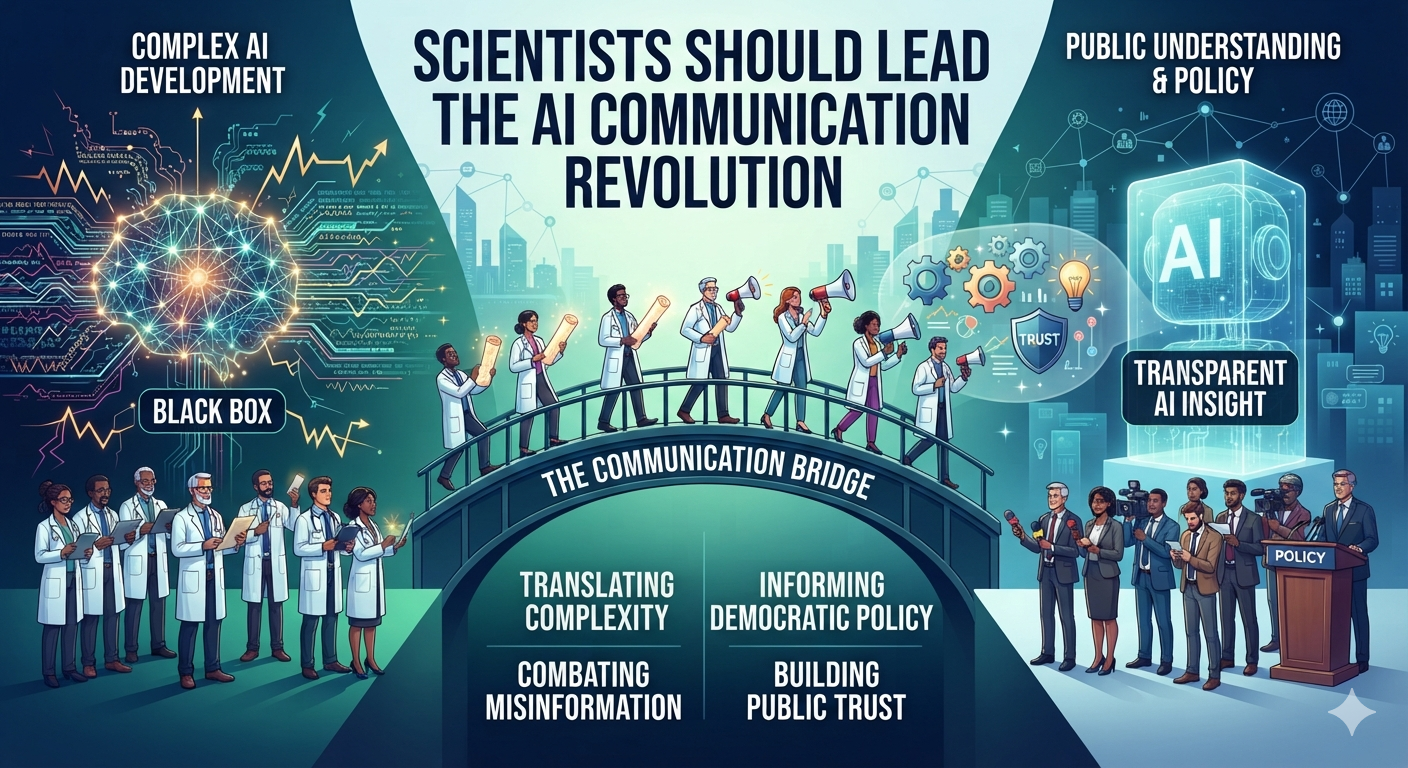
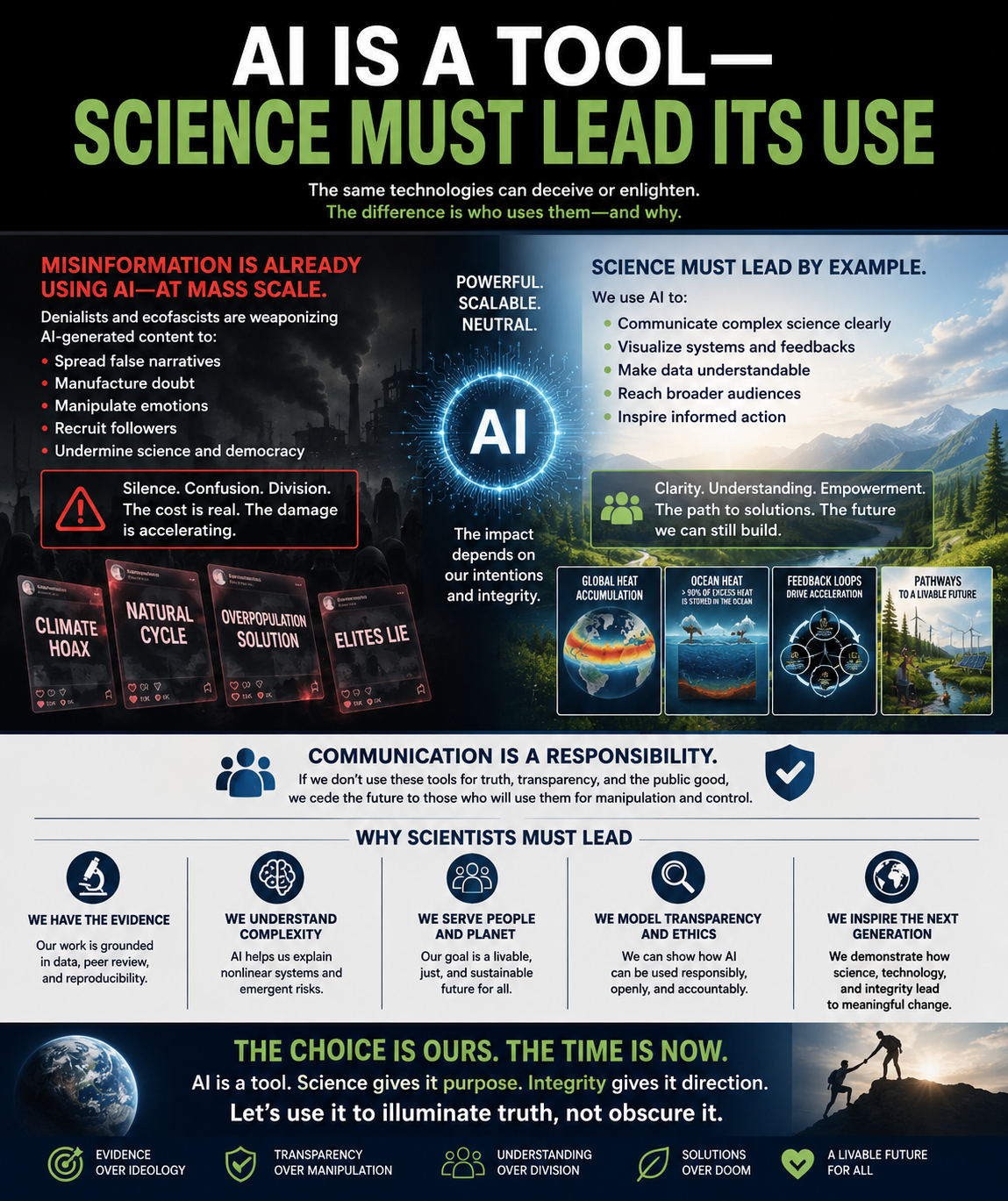
Easy-to-Read Resources